board & executive advisory
Your board has been briefed on AI. It still hasn’t been told what happens after the pilot.
I sit with boards and executive teams and give them the operator’s view of AI — what’s real, what’s theater, and which questions to ask before the next investment decision gets approved.
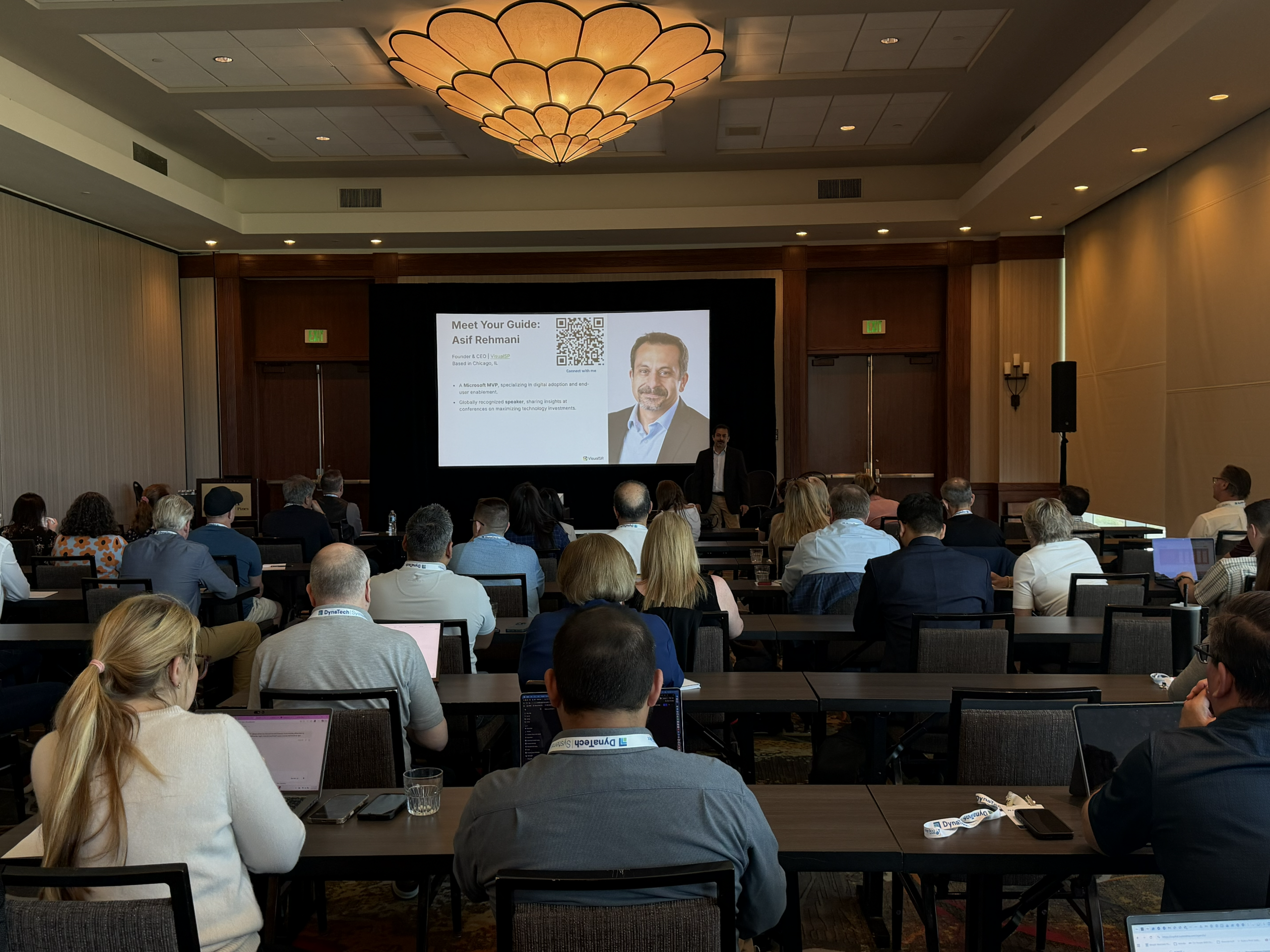
the missing seat
Every board has an AI advisor. Almost none have someone who has watched it fail.
Boards are not short on AI input. They have consultants with maturity models, academics with frameworks, and vendors with roadmaps. What they don’t have is anyone in the room who has stood inside an enterprise ninety days after the AI investment went live and watched usage flatline while the invoices kept arriving.
That’s the seat I fill. Not governance theory. Not a technology briefing. The pattern library of what actually goes wrong between the board approving an AI budget and the organization getting anything out of it.
why me
The operator’s view, not the consultant’s.
I’ve spent over two decades inside the Microsoft ecosystem, twenty of those years as a Microsoft MVP. I run a software company whose entire business is the gap between technology an organization purchased and technology its people actually use. I’ve trained tens of thousands of enterprise users and watched hundreds of rollouts either take hold or quietly die.
That vantage point produces something a framework can’t: I know what the failure looks like early, and I know which questions surface it before the second year of spend is committed.
Boards don’t get surprised by AI technology. They get surprised by AI adoption — and by then the money is already spent.
how i work with boards
Three ways in.
The Boardroom Briefing
Ninety minutes inside your existing board meeting. No slideware marathon. A plain-English read on where AI actually stands, what your management team’s AI reporting is and isn’t telling you, and a live working session on the questions your directors should be putting to the executive team.
Format: in person or virtual. Pre-briefing call with the chair or corporate secretary to tailor the session to what’s actually on your agenda.
The Executive Team Session
A half-day with the C-suite to pressure-test the AI strategy before it goes to the board. We take the actual plan, the actual budget, and the actual adoption numbers, and we stress them. Where is the value assumption? Who owns it? What breaks first?
Format: on site with your leadership team. Works well ahead of annual planning or a major license renewal.
Ongoing Advisory
A small number of board advisor and advisory board roles each year, typically with mid-market, private equity–backed, and nonprofit organizations making significant AI commitments. Standing access between meetings, not a once-a-year appearance.
Availability: deliberately limited so the work stays substantive. Inquiries welcome year-round. If what you actually need is someone owning AI inside the company month to month rather than advising the board, that’s fractional CAIO work.
the asset
Seven questions your board should be asking about its AI investment.
Not governance questions. Operating questions. Every one of these has produced an uncomfortable silence in a real boardroom — and every silence was worth more than the briefing that preceded it.
What percentage of the AI licenses we pay for were actually used last week? Not provisioned. Not activated. Used. Most management reports answer a different question than the one the board thinks it asked.
Name one business process that is measurably faster than it was a year ago. One. With a number attached. If the answer is a category rather than a process, the value is still theoretical.
Who owns AI adoption, and is it in their compensation? If adoption belongs to IT, it belongs to nobody with the authority to change how work gets done.
What did we stop doing when AI started doing it? If nothing stopped, we didn’t buy efficiency. We bought additional capacity, and we’re paying for it twice.
If our primary AI vendor doubled its price at renewal, what would we do? The honest answer reveals exactly how much strategic dependency we’ve taken on without pricing it.
When an employee acts on a wrong AI output, who reviewed it and what’s our exposure? Not a policy question. A workflow question. Policies exist at most companies; the review step usually doesn’t.
Are we measuring adoption, or are we measuring activity? Prompt counts, sessions, and monthly active users are activity. Adoption is whether the work changed. Most AI dashboards presented to boards contain no adoption metric at all — and the difference is where the entire investment case lives.
Directors are welcome to take these into their next meeting. No form, no download, no follow-up sequence. If they open a conversation worth having, let’s have it.
who this is for
The rooms where this lands.
Boards of mid-market companies making their first significant AI commitment. Private equity–backed boards where an AI thesis is part of the value creation plan. Nonprofit and association boards under pressure to have an AI position without an AI budget. Executive teams preparing an AI strategy that has to survive board scrutiny.
And CEO peer groups — EO, YPO, Vistage, and similar forums — where the audience is a room full of people who each have to make this call inside their own company.
scope
What this is not.
This is not legal or regulatory counsel. I don’t advise on AI compliance regimes, disclosure obligations, or fiduciary duty — your counsel does that, and does it better.
It is also not a sales call. I run a software company, and I’m aware of how that reads from a board seat. So the rule is simple and it doesn’t bend: in any board or executive advisory engagement, I do not sell, position, or recommend my own company’s product. If a vendor question comes up, I’ll answer it about the market and name my own conflict out loud. The value of this seat is that it’s independent, and independence you have to explain is already gone.
who you’d be working with
Asif Rehmani.

Twenty-time Microsoft MVP. Founder and CEO of VisualSP, a digital adoption platform used inside enterprise Microsoft environments. Speaking at Microsoft conferences since 2007, and on stage at the AI Agent & Copilot Summit, Microsoft 365 Conference, and TechCon.
I’ve spent my career on one problem: the distance between what an organization buys and what its people actually do. AI has made that distance the most expensive gap on the balance sheet — and the one boards are least equipped to see.
I take a limited number of board advisor engagements each year, alongside speaking and executive work.
start the conversation
Ninety minutes. Better questions. A board that can tell adoption from activity.
Tell me what’s on your agenda and who’s in the room. I’ll tell you honestly whether this is the right session for it.