fractional chief ai officer
Your company bought the AI licenses. Nobody owns what happens next.
I step in as your Chief AI Officer on a monthly retainer. I own the roadmap, the rollout, and the uncomfortable question of whether any of it is actually working — without you adding a six-figure executive to payroll.
the actual problem
AI is everyone’s side project and nobody’s job.
IT owns the licenses. Marketing runs its own experiments. Someone in finance has a ChatGPT tab open they haven’t told anyone about. The CEO owns the anxiety. And at the end of the quarter, nobody can tell you what changed.
That’s not a technology problem. It’s an ownership problem. Large companies solve it by hiring a Chief AI Officer. If you’re a 50 to 500 person company, that hire doesn’t pencil out — and honestly, most of the people taking those titles right now have never actually run a rollout.
why me
I’ve watched hundreds of these rollouts from the inside.
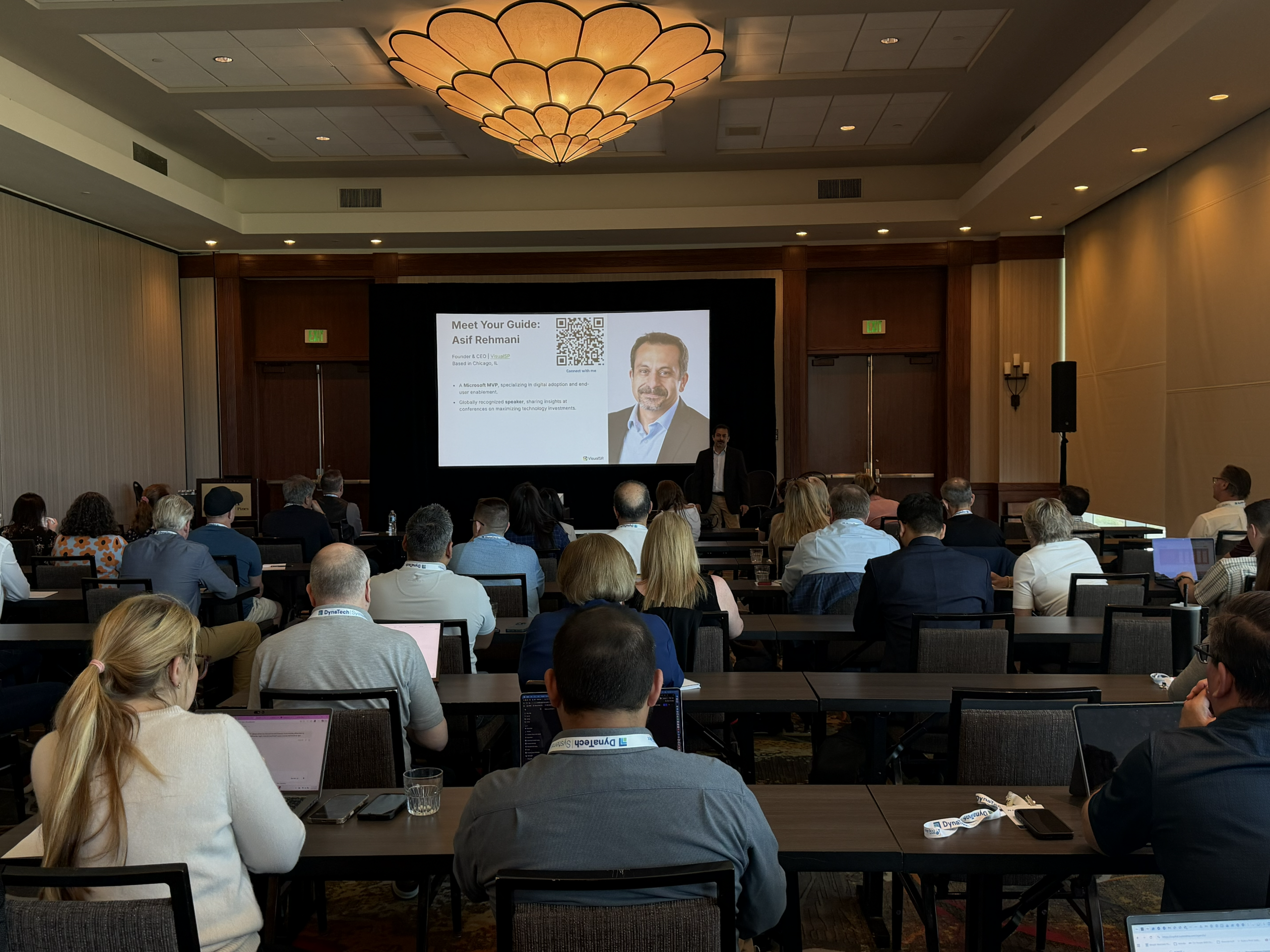
I’ve spent twenty years helping enterprises get their people to actually use the software they already paid for. For the last three years that’s been Microsoft 365 Copilot, almost exclusively — workshops, rollouts, adoption programs, post-mortems on the ones that died.
I’m a Microsoft MVP. I run a software company in this space. I’ve sat in the room when a leadership team realized their $400,000 in Copilot licenses had produced exactly nothing, and I’ve sat in the room when it worked. The difference is almost never the technology.
Most AI consultants are selling you a strategy deck. I’m signing up for the part where it either works or it doesn’t.
what i own
Three things, every month.
The roadmap
Where AI goes first, and just as importantly what gets killed. Sequenced across the next two to four quarters against your actual constraints — budget, headcount, appetite for change — not a generic maturity model.
You get a prioritized plan you could defend to your board, and a standing say in what does and doesn’t get funded.
The rollout
Copilot and Microsoft 365 adoption, owned end to end. Which teams go first, what they’re taught, how it’s reinforced after week two, and what the usage data is actually telling you.
This is the part almost everyone underestimates, and it’s the part I’ve done more times than anything else in my career.
The team
An internal champion identified and trained. Monthly working sessions with your leadership team so they can hold their own in an AI conversation instead of nodding along.
The goal is that the capability stays after I’m gone. If you still need me in year three, I did this wrong.
how it works
Two days a month, roughly. Structured, not ad hoc.
Every engagement starts with the same 30 days, because you can’t sequence anything until you know what’s actually happening in the building.
Interviews with your leadership team. A read of what people are actually using, including the tools nobody told you about. Where the licenses sit versus where the work is. You get a written picture of reality, which is usually the first time anyone’s had one.
One or two use cases that matter, chosen because they’re winnable and visible. First cohort trained. Baseline measurement in place so that in month four we’re arguing about numbers instead of vibes.
A working session with the leadership team. A session with your internal champion. Async access to me in between for the decisions that don’t wait for a calendar invite. Roadmap re-cut every quarter.
I hold three of these at a time. That’s not scarcity marketing — it’s what I can do properly while still running my own company. Engagements run six months minimum, because anything shorter is a strategy deck with extra steps.
Most engagements are remote, with onsite time for the kickoff and the quarterly re-cut. I’m based in Chicago.
fit
Who this is for.
Companies between roughly 50 and 500 people, already on Microsoft 365, where the CEO or COO has decided AI matters but there’s no obvious person to hand it to. PE-backed companies under pressure to show an AI story to their sponsor. Professional services firms where the billable hour and AI are on a collision course.
It works best when I report to the CEO or COO directly. If this gets buried under IT, it becomes a licensing project and dies there.
Who it’s not for: companies looking for someone to build models or write code — that’s an engineering hire, not this. Companies that want a strategy document to satisfy a board and then never look at it again. And anyone who wants a yes-man; I’ll tell you when your AI idea is bad, which is most of the reason to hire an outsider for this.
the obvious question
I run a software company. Here’s the firewall.
I’m the CEO of VisualSP, a digital adoption platform. You should assume any advisor with a product is steering you toward it. So let me be direct: I do not sell, position, or recommend VisualSP inside a fractional CAIO engagement. It’s not on the table, it’s not in the roadmap, and if a digital adoption platform genuinely belongs in your stack, I’ll hand you the evaluation criteria and step out of the room while you run it.
The whole value of an outside CAIO is that their advice isn’t for sale. The moment it is, you’re paying retainer rates for a sales call.
Two other things I’m not: I’m not your legal or compliance counsel — I’ll flag where you’re exposed and tell you to get a real lawyer. And I’m not an implementation shop. I own the decisions and the enablement; your team or your partners do the building.
next step
Start with a conversation, not a proposal.
Tell me what’s happening in your company right now — what you’ve bought, what’s stalled, what your leadership team actually believes about AI. If I’m the wrong fit I’ll say so on that call and point you somewhere better.
Asif Rehmani is a Microsoft MVP and the CEO of VisualSP. He has spent two decades helping enterprises turn software purchases into actual behavior change, and the last three years focused almost entirely on Microsoft 365 Copilot adoption. He also advises boards and executive teams and speaks on AI adoption.